> For the complete documentation index, see [llms.txt](https://help.aristotlemetadata.com/llms.txt). Markdown versions of documentation pages are available by appending `.md` to page URLs; this page is available as [Markdown](https://help.aristotlemetadata.com/collaborating-within-the-registry/how-to-create-collections-and-sub-collections.md).
# How to create Collections and Sub Collections
### How to create Collections
{% hint style="danger" %}
You have to be an Administrator to create Collections
{% endhint %}
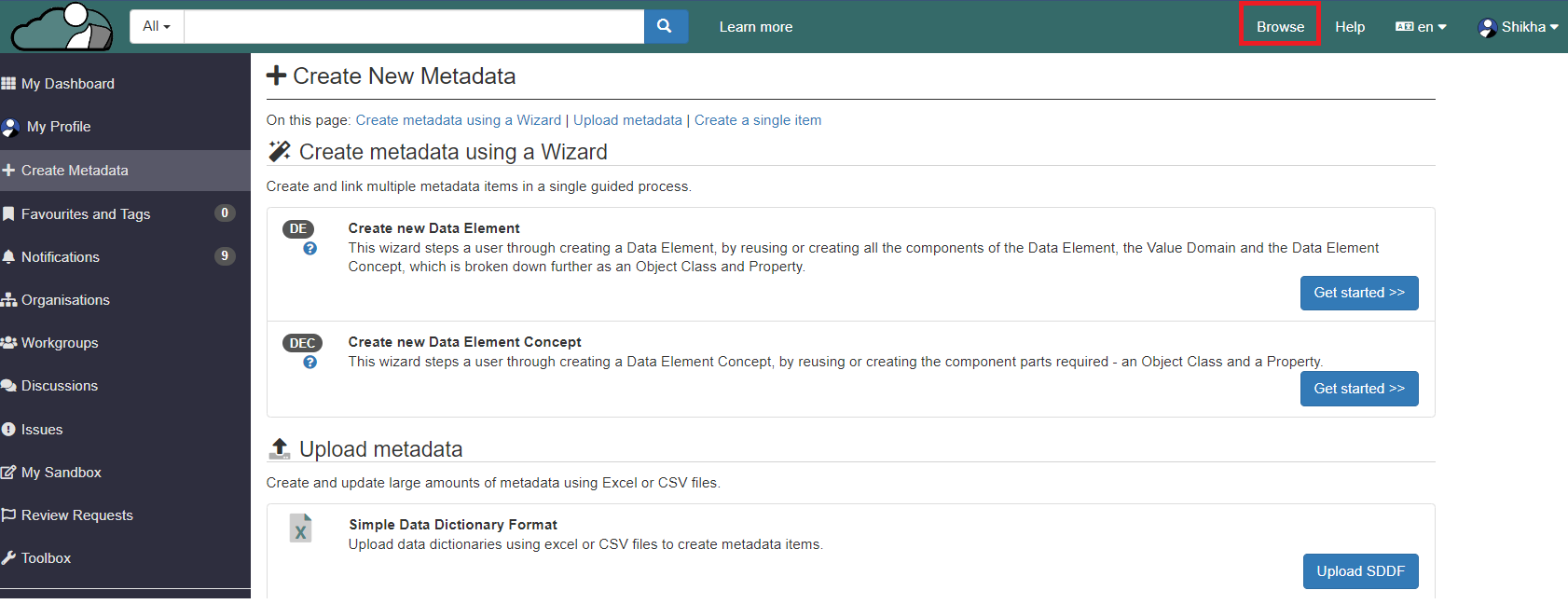
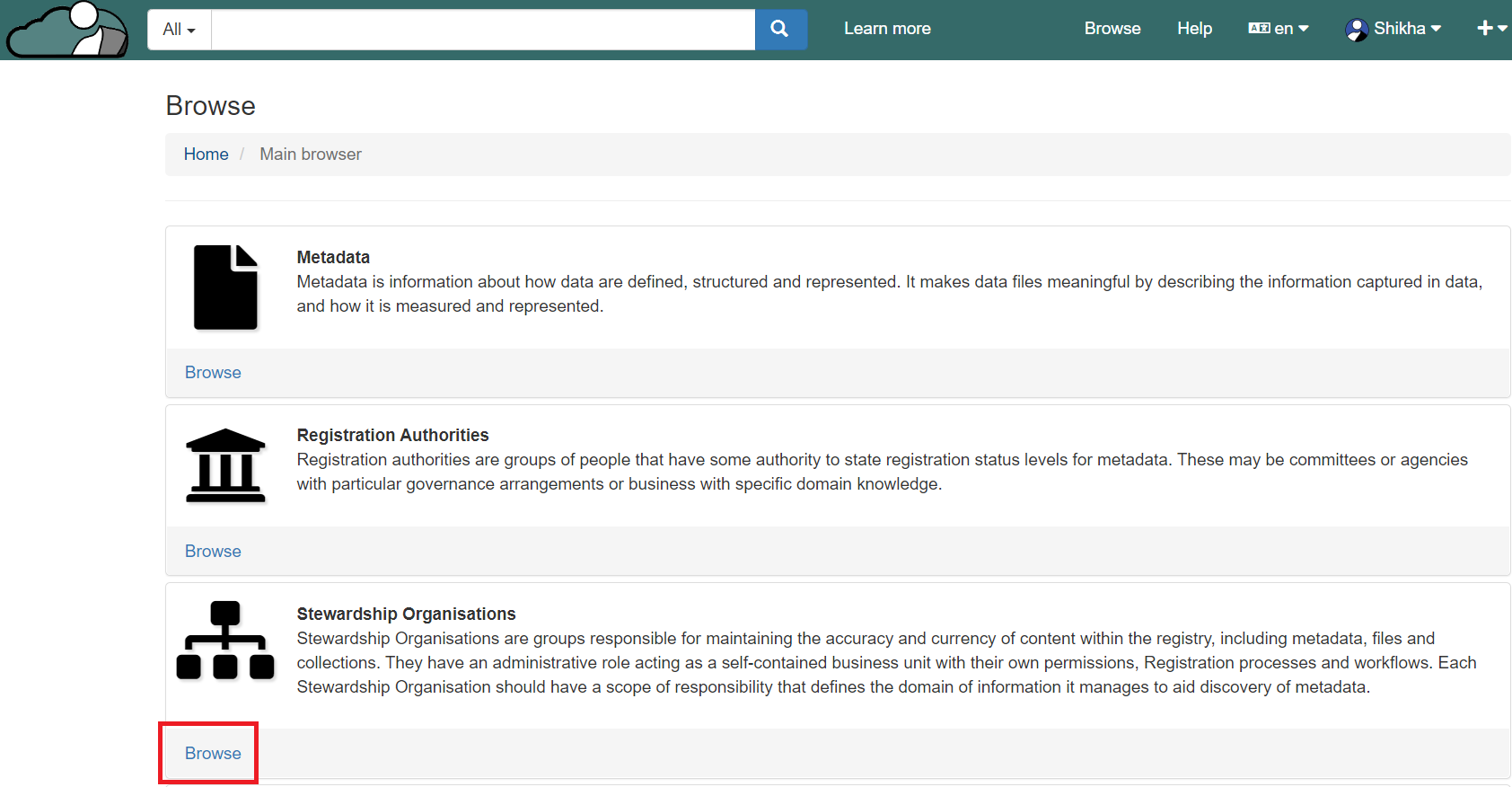
1. To create collections, go to browse.
2\. Go to the stewardship organisation, click on browse.
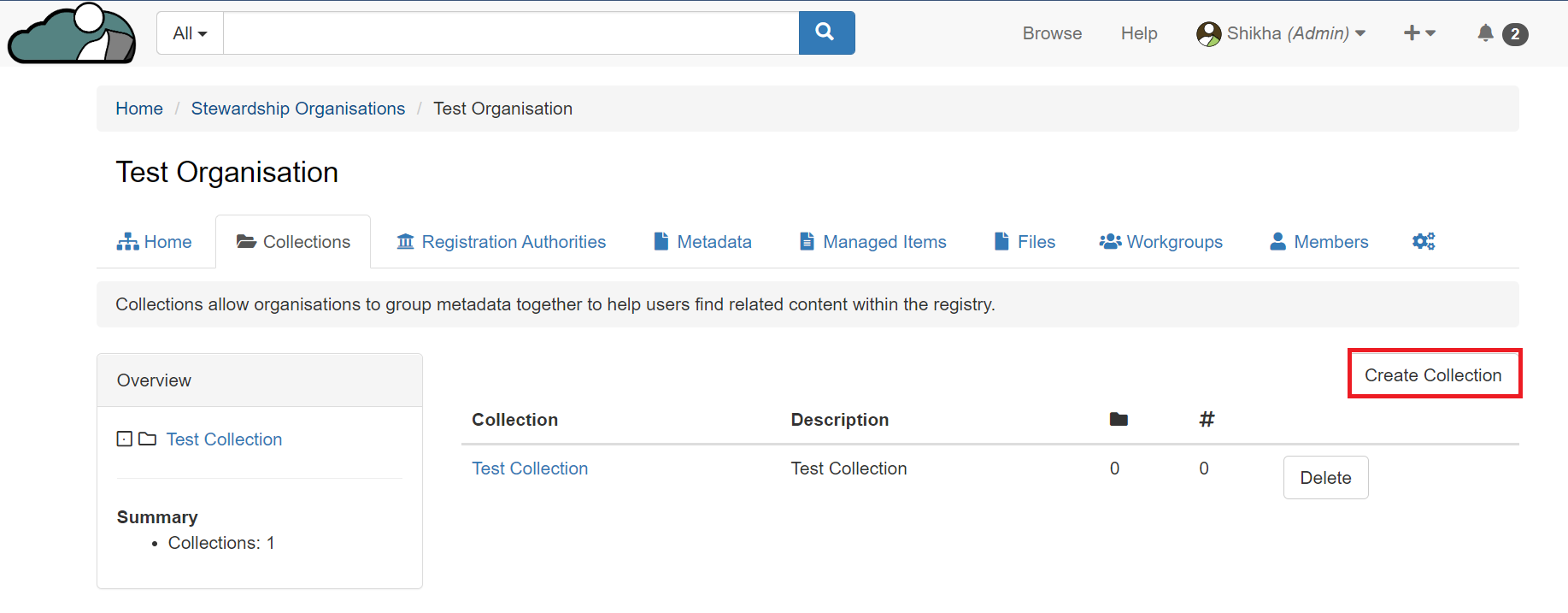
3\. Click on the stewardship organisation name where you want to create collections. Go to the collections tab, click on 'create collection'.
4\. Give a name and description to the collection. From the 'add metadata permission' dropdown, select who you want to give access to the collection. Once done, click on
### How to create a Sub Collection
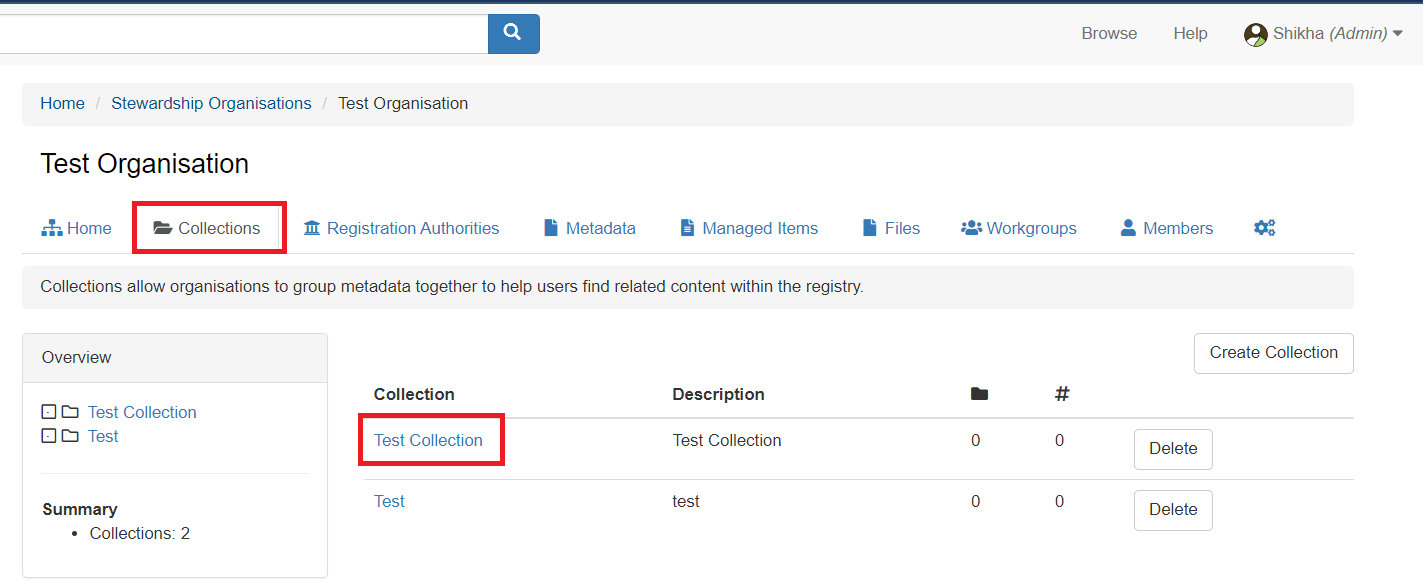
1. Go to stewardship organisation. In the Collections tab, click on the Collection name where you want to create sub collection.
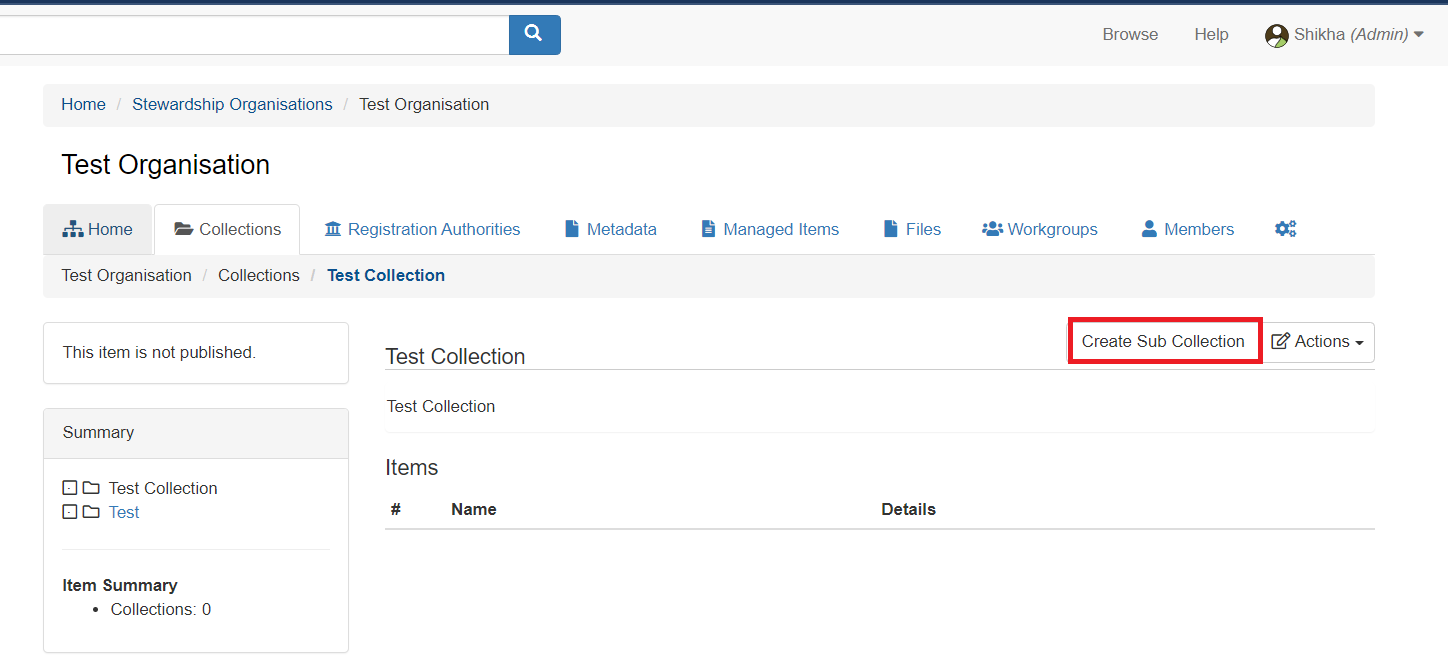
2\. Click on 'Create Sub Collection'
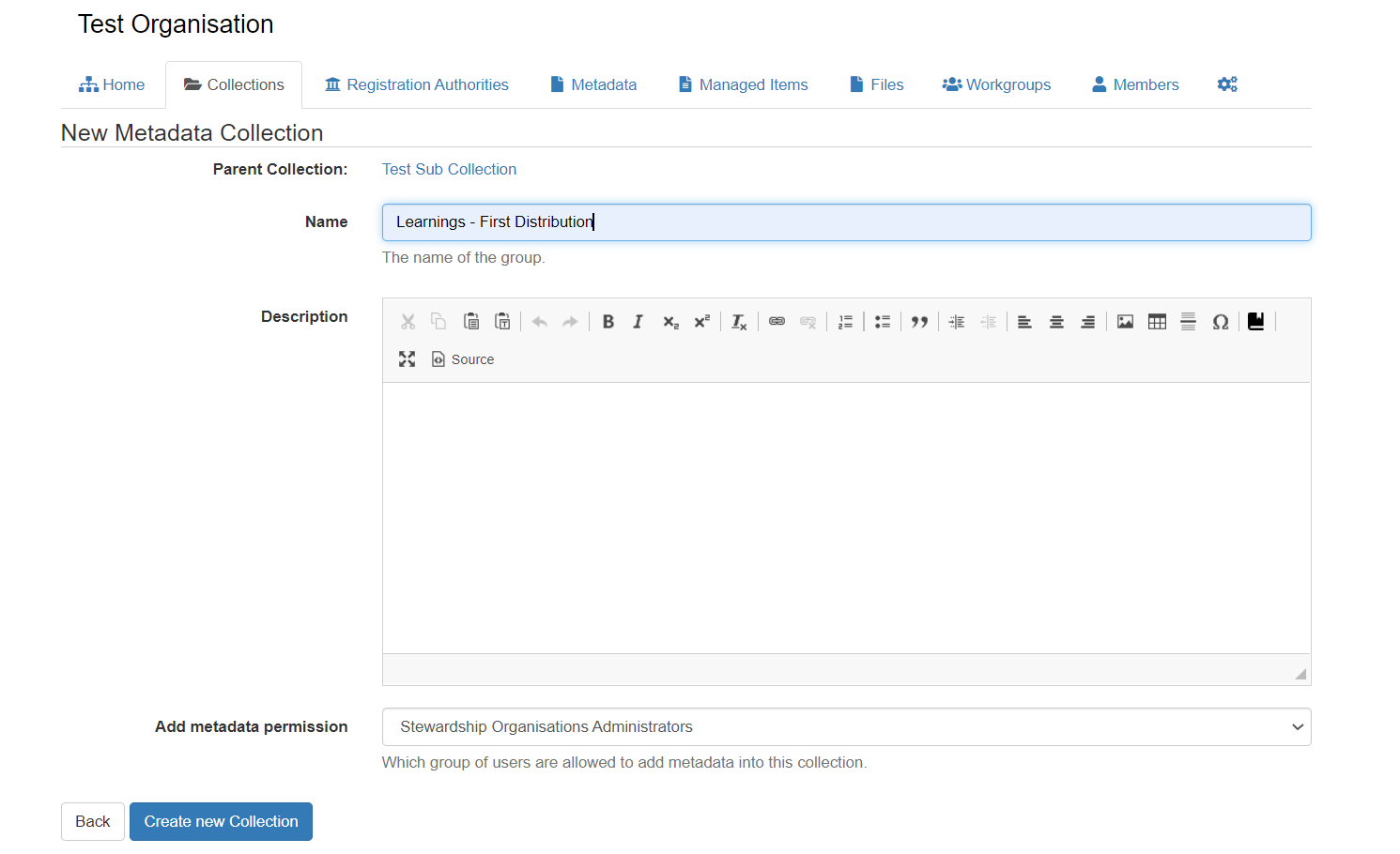
3\. Give a name and description to the sub collection. From the 'add metadata permission' dropdown, select who you want to give access to the sub collection. Once done, click on
 ### How to create a Sub Collection
1. Go to stewardship organisation. In the Collections tab, click on the Collection name where you want to create sub collection.
### How to create a Sub Collection
1. Go to stewardship organisation. In the Collections tab, click on the Collection name where you want to create sub collection.